
Choose Walla Walla People Search Trails
Walla Walla is both a city and the Walla Walla County seat, which puts several strong name trails close together. The County Auditor records deeds and liens. The Assessor and Treasurer connect addresses to parcels. Court clerks hold case files, while Washington agencies maintain vital, voter, license, business, and custody systems. The useful starting point depends on whether the known fact is a name, address, event, business, or case.
Begin with the narrowest official record that fits the known fact. A name alone may need spelling variants and a date range. An old Walla Walla address can move first through the parcel roll, then the recorded-document index. A deceased relative may be easier to distinguish through probate, cemetery, newspaper, and historical records than through a current directory.
- Write down the known facts. Keep the full name, variants, rough years, address, business name, and any case or parcel number together.
- Choose the right jurisdiction. Decide whether the Walla Walla fact belongs to city government, Walla Walla County, a Washington agency, or a federal court.
- Search the strongest index. Use the recorder for parties to land instruments, the assessor for an address, and the courts for a litigant or estate.
- Open the source record. An index points to a document; it does not replace the deed, docket filing, certificate, or agency file.
- Cross-check one independent trail. Compare names, dates, and places before deciding that two Walla Walla entries describe the same person.
Record trail: a linked set of official or archival entries that lets a searcher move from one stable fact, such as an address or case number, to another.
Note: A tax mailing address identifies where notices go and should not be treated as proof that an owner lives there.
Walla Walla People Search Offices and Custodians
The record keeper matters as much as the name. Walla Walla County's Recording Department handles recorded instruments and marriage applications, the County Clerk serves Superior Court files, and the City Clerk manages municipal records. The assessor is the address-to-parcel route. More detailed access and request rules belong in the Walla Walla public records system overview.
Walla Walla County Recording Department
500 W. Main Street
Walla Walla, WA 99362
509-524-2549
Walla Walla County Courts
County courthouse and court counters
Walla Walla, WA 99362
District Court: 509-524-2760
Walla Walla City Clerk
15 N. 3rd Avenue
Walla Walla, WA 99362
509-527-4424
The County Assessor and Treasurer operates from 315 W. Main Street and can be reached at 509-524-2560. City police files have a separate records route through WWPD at 54 E. Moore Street. Sending a well-described request to the correct Walla Walla custodian avoids delay and keeps unlike records from being blended.
Compare Walla Walla Land Name Indexes
The Walla Walla County Auditor's EagleWeb index starts January 1, 1951. Public Login provides a free index and unofficial watermarked images when display is allowed. The Washington Digital Archives mirror begins in 1986, supports name-oriented searching with Soundex, and may supply images. It held 435,815 Walla Walla entries when the research was inspected, but the current year can lag because transfers are periodic.
County EagleWeb
Use it for the longer 1951-present span, current recordings, instrument filters, and Auditor File Numbers. Some privacy-sensitive or marginal historic documents remain index-only.
Digital Archives mirror
Use it for a second search from 1986 forward, especially when spelling variation makes Soundex useful. Always read the collection coverage before treating no result as no record.
The Walla Walla recorder login and coverage screen shows where Public Login begins.
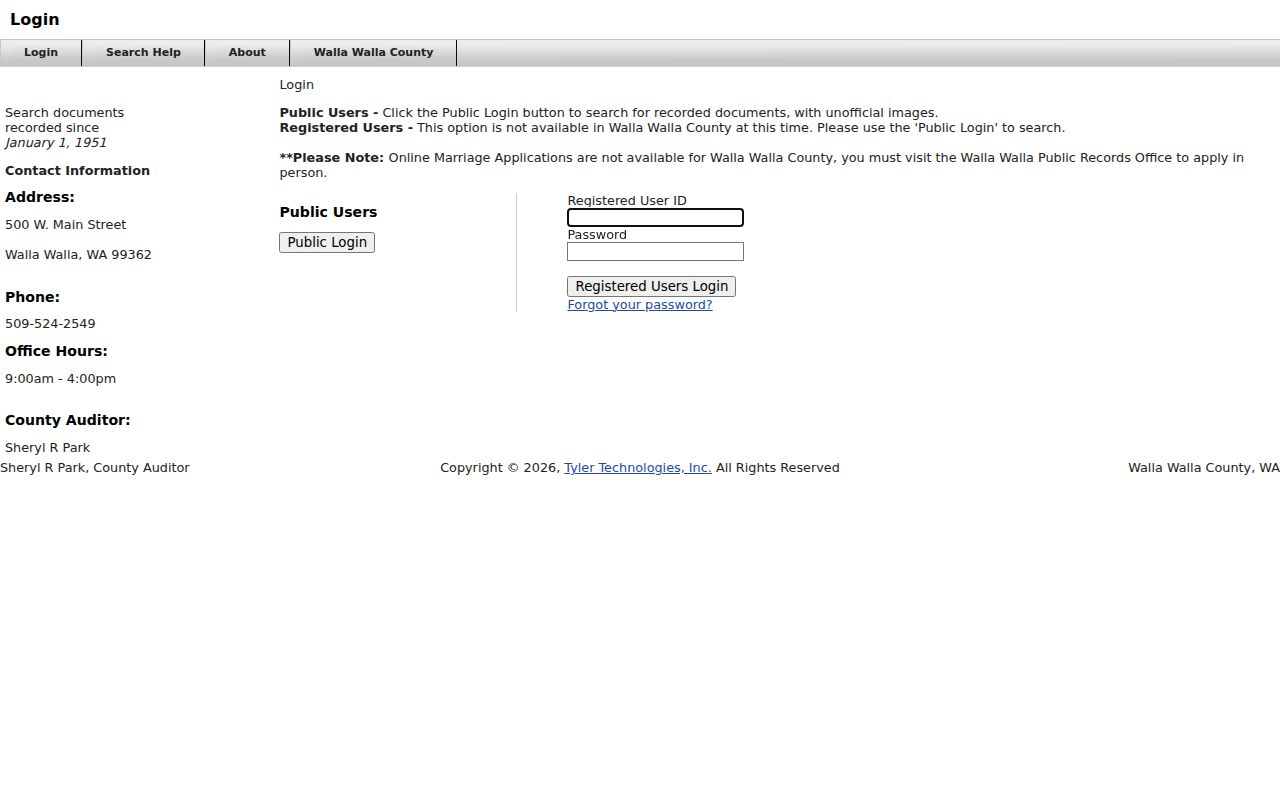
That screen is the gateway to grantor, grantee, date, and document-type research rather than a broad resident list.
| Search control | How it narrows a Walla Walla record |
|---|---|
| Grantor / Grantee | Separates the person giving an interest from the person receiving one. |
| Last or company name | Finds an individual surname or organization listed as a party. |
| First and middle name | Reduces false matches among people sharing a surname. |
| Recorded date range | Limits results to the years relevant to the Walla Walla people search. |
| Document type | Focuses the set on deeds, liens, releases, plats, or another instrument class. |
| Auditor File Number | Retrieves a known recording with the most stable key. |
Note: Official recorder copies come from the office or by mail; online prints are watermarked and expressly unofficial.
Turn Walla Walla Addresses Into Search Trails
The County Assessor and Treasurer portal is the practical first stop when an address is known but a name is not. It accepts street, parcel, DBA, and legal-description criteria and also offers a prior appraisal-year selector. Once a parcel is identified, the researcher can move to sales details, maps, and the Auditor's recording chain. City GIS adds zoning, annexation, and service context, but it is not the ownership roll.
The Walla Walla County property search exposes the criteria used to resolve an address.
A reliable workflow reads the parcel detail first, checks the sale history, and then follows named parties through the recorded-document index.
A postal Walla Walla address does not prove that a parcel lies inside city limits. Annexation and pre-zone maps explain why a location may have older county-era files and newer city permits. Historic research may also need subdivision names: more than 60 additions were platted from 1900 through 1910, and an 1884 map identifies Seventh Avenue as formerly Seventh Street.
Trace Walla Walla Court Records by Name
Washington Courts Search Case Records is the broad party-name index for courts serving Walla Walla. Superior Court handles felony, civil, domestic-relations, probate, guardianship, adoption, juvenile, and lower-court appeal matters. District Court handles limited-jurisdiction matters such as misdemeanors, small claims, protection orders, infractions, and name changes. Federal matters go to the U.S. District Court for the Eastern District of Washington and PACER.
The Washington statewide court search supplies case metadata that can point a Walla Walla people search toward the right clerk.
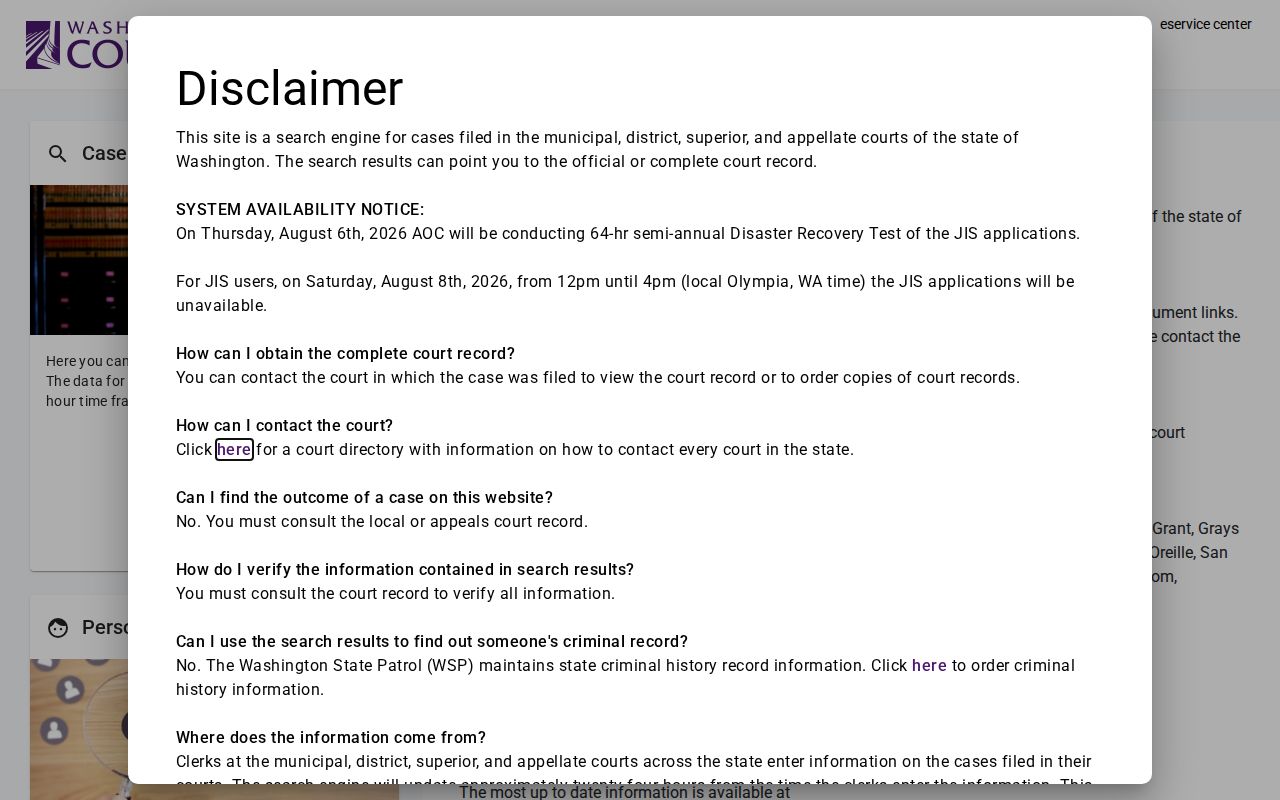
Use the case number from a match when asking the local clerk for pleadings, orders, or certification.
| Record level | Likely Walla Walla content | Best access route |
|---|---|---|
| Superior Court | Civil, felony, probate, guardianship, and family case metadata | State index, then County Clerk file request |
| District Court | Limited civil, misdemeanor, infraction, name-change, and protection-order matters | State index and District Court records counter |
| Federal District Court | Federal civil and criminal dockets | PACER or the federal clerk |
Index versus file: the index identifies a case and shows public metadata; the clerk's file contains the actual public filings. Sealed, juvenile, adoption, and protected information may not be available.
Note: A Washington Public Records Act request does not replace the court clerk process for a judicial case file.
Follow Walla Walla Vital Records
Washington's modern statewide birth and death system begins July 1, 1907. The Department of Health holds marriage and divorce certificates from January 1, 1968 forward. Walla Walla County's Auditor retains local marriage material, while the Superior Court Clerk holds divorce case files. A DOH divorce certificate summarizes the event; it is not the pleadings and orders from the court case.
Current certificate access depends on the product. Certified birth and death copies require identity and qualifying proof. Informational birth copies and short-form informational death copies follow different rules. DOH certificates cost $25 each, while ordering-channel processing charges may apply. Marriage and divorce certificate applications require the event facts, and court-file fees remain separate.
For historical Walla Walla people research, the archival periods differ. Birth and fetal-death records transfer after 100 years, while death, marriage, and divorce records transfer after 25 years. The Washington vital records office explains current certificates; Digital Archives coverage must still be checked series by series.
Note: The 100-year rule does not cover every vital event; Washington uses shorter archival periods for death, marriage, and divorce records.
Search Walla Walla's Mountain View People Index
Mountain View Cemetery offers one of Walla Walla's deepest city-operated name resources. The city says all burial records are online, including burials dating to the 1850s. The cemetery combines grounds formerly run by the Masonic Lodge, International Order of Odd Fellows, Catholic Church, and city. Its map also identifies Jewish, Chinese, veterans, Babyland, Elks Rest, mausoleum, and garden areas.
More than 40,000 interments across almost 80 acres make the burial search useful for distinguishing names and linking a person to a death era. Genealogy Notes include military service, though the city does not add other genealogy details for publication. The cemetery office at 2120 S. 2nd Avenue provides the fallback when an online result needs interpretation.
Use a cemetery match as a bridge, not a full identity. Compare the burial entry with probate, an obituary, a death record, or a family collection. A cemetery section can suggest where more historical context may exist, but it does not prove membership in the organization once tied to that ground.
Connect Walla Walla Names to Business Filings
Washington's Corporations and Charities Filing System can connect a Walla Walla business or organization name to its legal entity. Search by entity name or exact UBI number, then inspect public details such as status, formation or registration date, registered agent, addresses, governors, and filing history when shown. A trade name can differ from a corporation or LLC name, so both identifiers may need separate searches.
The Washington CCFS entity search shows the public business-search interface used for this trail.
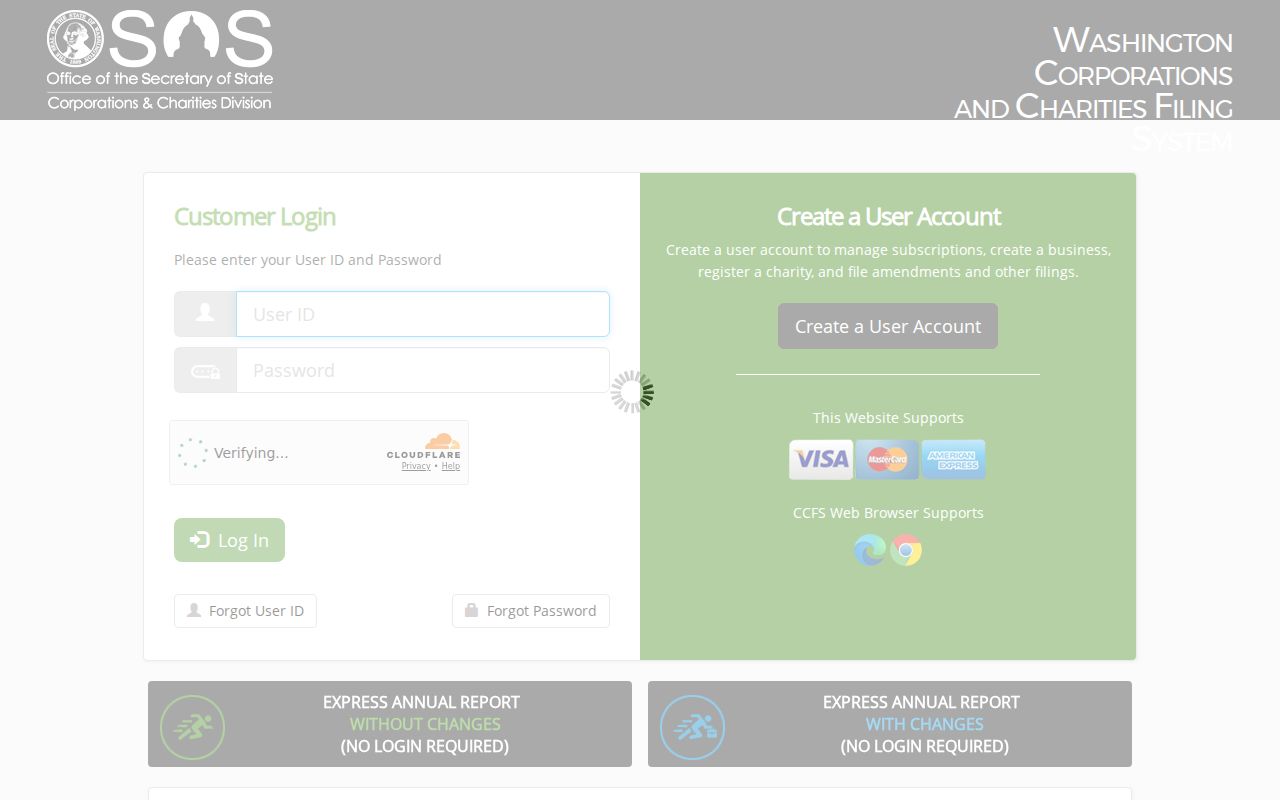
A listed agent address, tasting-room address, vineyard parcel, and proprietor address can all be different. That distinction is especially important in the Walla Walla valley's agriculture and wine economy.
Professional credentials add a second official check. Washington maintains separate lookups for Department of Licensing professions, health providers, contractors, lawyers, and liquor licenses. These systems help distinguish same-name people by credential, occupation, entity, and public contact, but none is a complete Walla Walla resident directory.
Keep VoteWA Narrow for Walla Walla Searches
VoteWA is an authenticated voter self-service tool, not an open name directory. A registered voter signs in with first name, last name, and date of birth. A no-match directs the voter to the county elections office, and multiple matches may prompt selection of the correct address. Public voter-file rules are separate from what one voter sees after authentication.
The VoteWA lookup displays the self-service sign-in used by Walla Walla County voters.
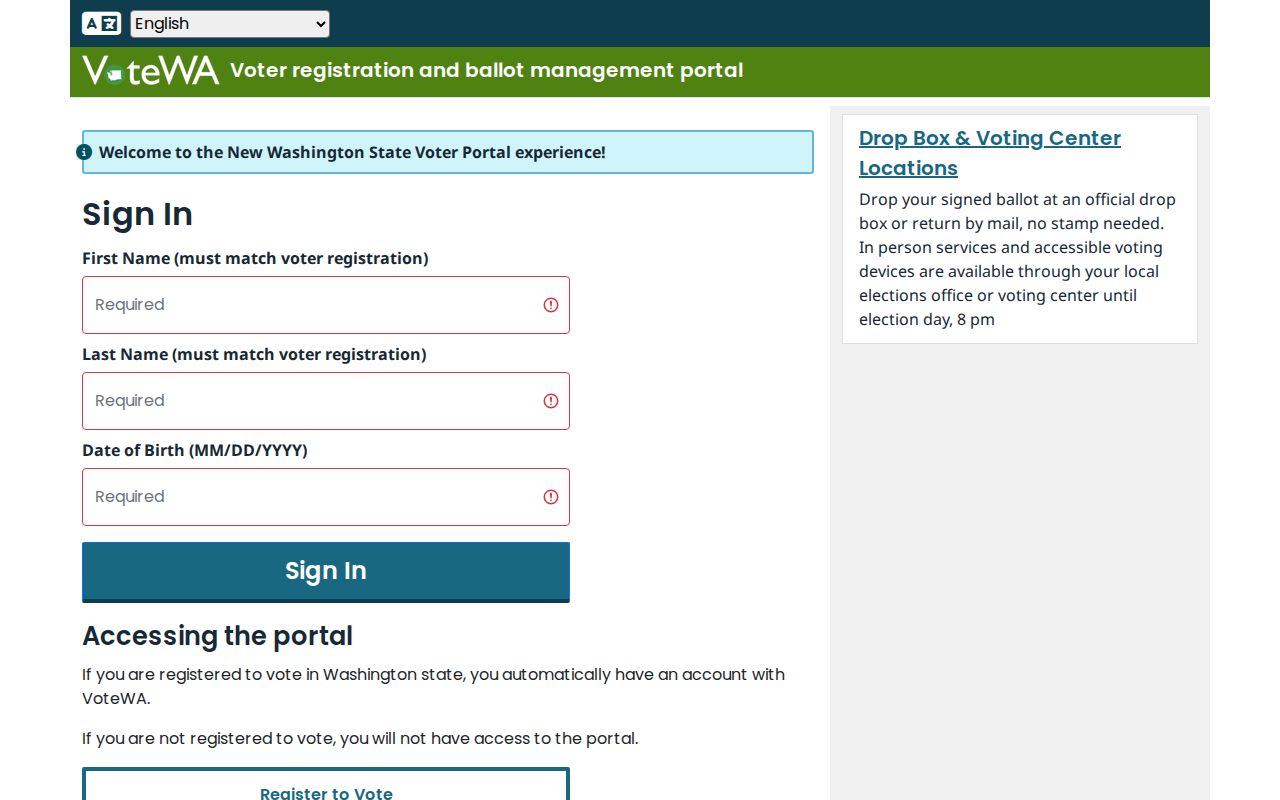
The form's date of birth requirement should not be mistaken for permission to browse another person's complete voter details.
Washington law separates public voter fields from confidential identity data, full dates of birth, and protected addresses. Readers who need the record set end to end can use the Walla Walla voter registration search for the statutory split, extract route, and local fallback.
Use Walla Walla City Records Requests
City records include legislative material, police records, permits, code matters, licenses, and planning files. The city's document archive states that it holds the complete legislative history. If a record is not in the archive, the City Clerk is the assistance point and NextRequest is the web submission route. Police reports go through the separate WWPD records channel because police exemptions and redactions differ.
The City of Walla Walla request portal is the online channel for a clearly described municipal record.
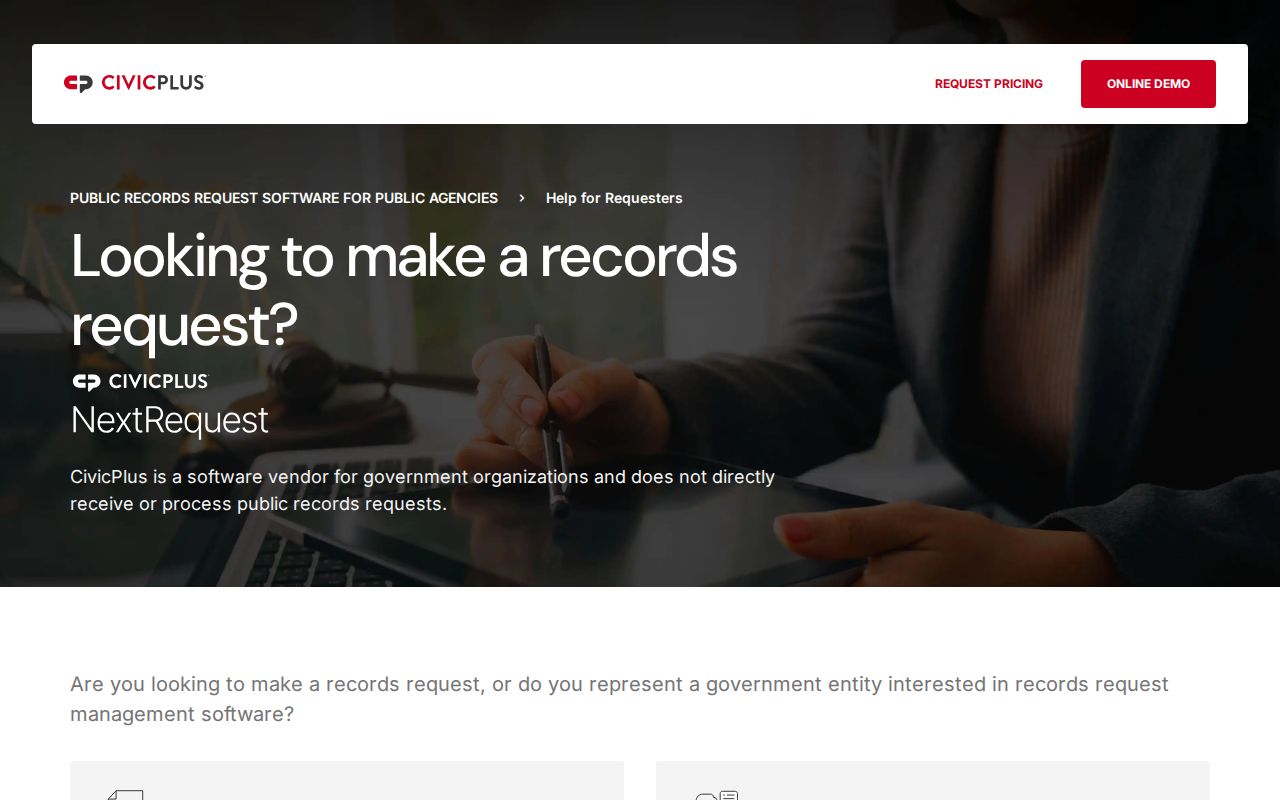
A useful request names the person or party, office, record type, date range, address, and any stable file number. Washington agencies must respond within five business days by producing or linking the record, acknowledging the request with a reasonable estimate, or denying it with reasons. That deadline is for the initial response, not guaranteed completion.
Permit access has a local timing wrinkle. Walla Walla moved applications, payments, and inspection requests into a new electronic system in 2025. Permits processed before August 19, 2025 may still need help from a permit technician. Monthly PDFs for licenses, applications, issued permits, and summaries offer a free alternative when the account-gated project portal is not the best route.
Note: Send city, police, county, and court requests to their own custodians because one Walla Walla office cannot release every system's files.
Check Washington Custody Records from Walla Walla
The Washington Department of Corrections Incarcerated Search accepts a DOC number or a first and last name. Typical results show the DOC number, name, age, current location, and a VINE notification link. The agency warns that information changes quickly, so a result should be verified before it is treated as current or complete.
A separate DOC warrant search can filter by first name, last name, DOC number, crime, and county. It covers outstanding Secretary's warrants, not every local Walla Walla court warrant. The official current Walla Walla County jail roster URL was not verified after the county site migration, so the safe fallback is the county corrections desk or a narrow records request, not an unofficial roster.
Use custody records for accurate status checks and personal safety, with care for identity collisions. A name match alone is weak; compare the DOC number, age, location, and other official fields that the agency actually releases.
Carry Walla Walla Searches Into Archives
Online Walla Walla recorded-document access has real boundaries. EagleWeb begins in 1951 and the Digital Archives land mirror begins in 1986. Pre-1951 land research can require the Auditor and Washington State Archives Eastern Region. The regional archives preserves selected local-government series, but not every older file automatically transferred there, so staff may need to identify the holding repository.
The Digital Archives Walla Walla land collection documents the state mirror and its coverage.
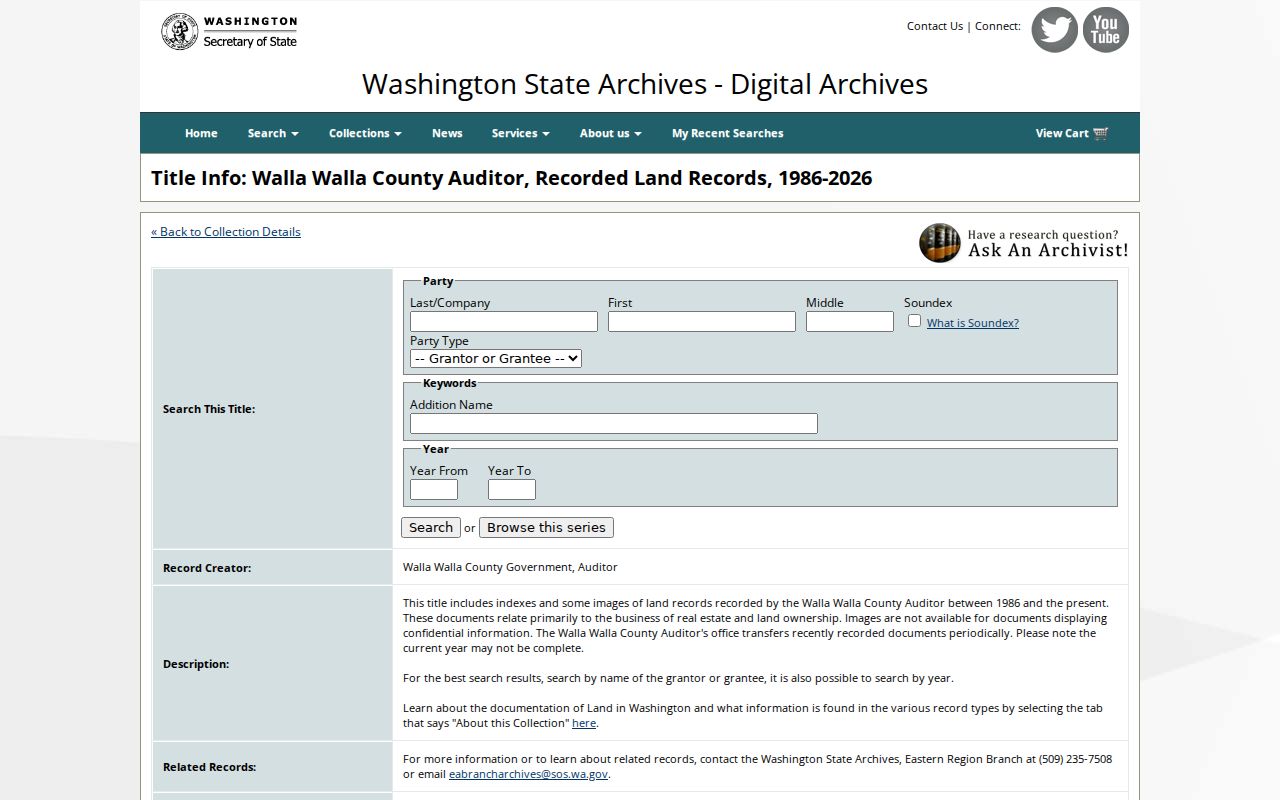
The collection screen makes the coverage boundary visible before a searcher interprets a missing name.
Beyond government files, Whitman College and Northwest Archives hold manuscripts, photographs, publications, and institutional collections. Fort Walla Walla Museum supplies regional context. The Washington State Library offers the 1918 two-volume History of Old Walla Walla County, and newspapers can connect a surname to notices, addresses, clubs, and events. An archive finding aid describes a collection, not every person named inside it, so searches by employer, church, club, family collection, or photographer may reveal more than a surname alone.
Separate the Many Meanings of Walla Walla
“Walla Walla” can mean the city, county, valley, university, community college, historic fort, or Indigenous people. A bare place-name search can mix jurisdictions, institutions, and eras. Add the record keeper, year, and place type to each query. A Walla Walla University directory, for example, is not a City of Walla Walla government record, and a postal-city label may cover property outside the incorporated service area.
The same care applies to historical communities. Walla Walla's record story includes Cayuse, Umatilla, and Walla Walla homelands, mission and military history, migration, rail and agricultural growth, and the later wine industry. Printed directories never represented every community equally. Tribal cultural and membership information is not simply an open county name index, and institution-specific access protocols must be respected.
Search spelling variants without turning them into assumptions. Initials, former surnames, compound names, spacing, hyphenation, OCR errors, and Soundex can all change results. For Hispanic and Latino history, try paternal and maternal surname patterns without deciding in advance how a cataloger indexed a particular person.
Note: A result becomes more credible when its jurisdiction, year, record keeper, and independent source all point to the same Walla Walla identity.
Finish Walla Walla Searches With Source Checks
Official indexes and broad commercial compilations solve different problems. A compiled result may gather phone, address, relative, and public-record hints quickly, but it can preserve stale facts or merge two namesakes. Walla Walla agency indexes are narrower and sometimes slower, yet they identify the record keeper and stable source. The strongest result uses a broad lead only to choose the next official or archival record.
Before relying on a match, compare at least two independent facts such as a middle name, date range, parcel, filing number, relative, or institution. Then retain the source URL, access date, and record number. If the online display omits the image or the needed year, contact the Auditor, clerk, City records officer, cemetery, library, museum, or Eastern Regional Archives through the documented fallback.
Walla Walla's best people-search trails are layered: address to parcel, parcel to deed, deed party to court or business record, and historical name to cemetery, probate, newspaper, or archive. Each step narrows the identity without asking one index to prove more than it actually holds.